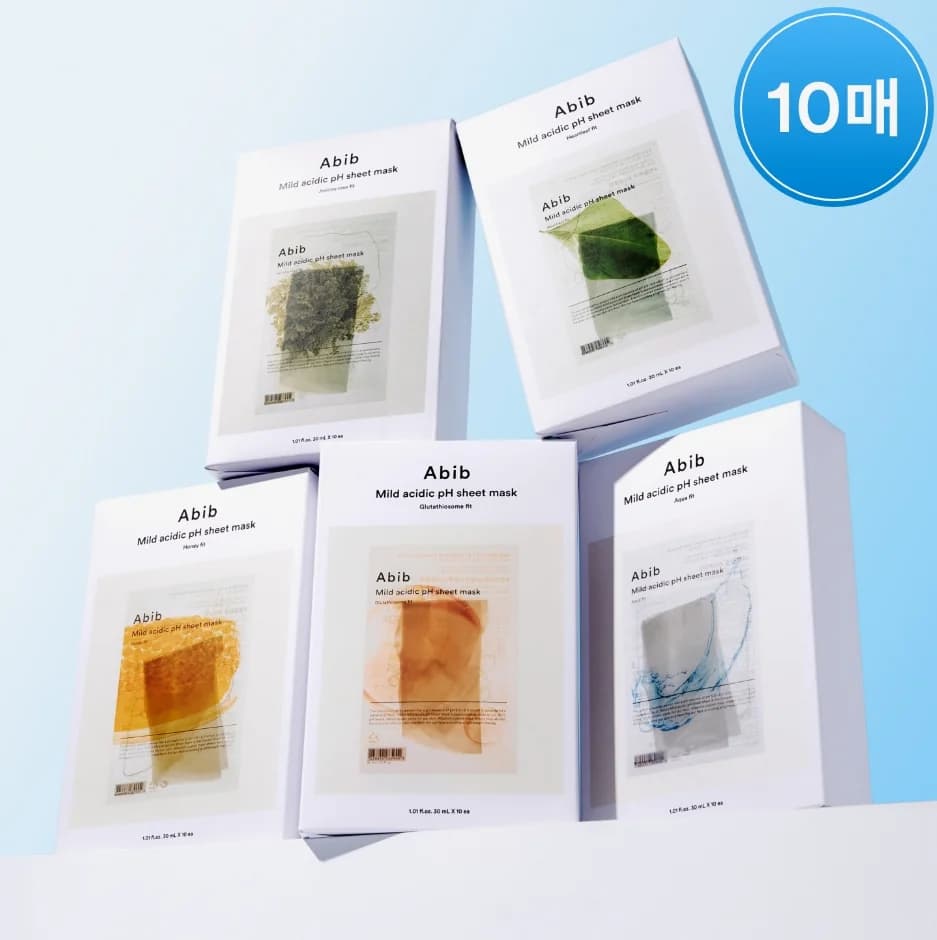
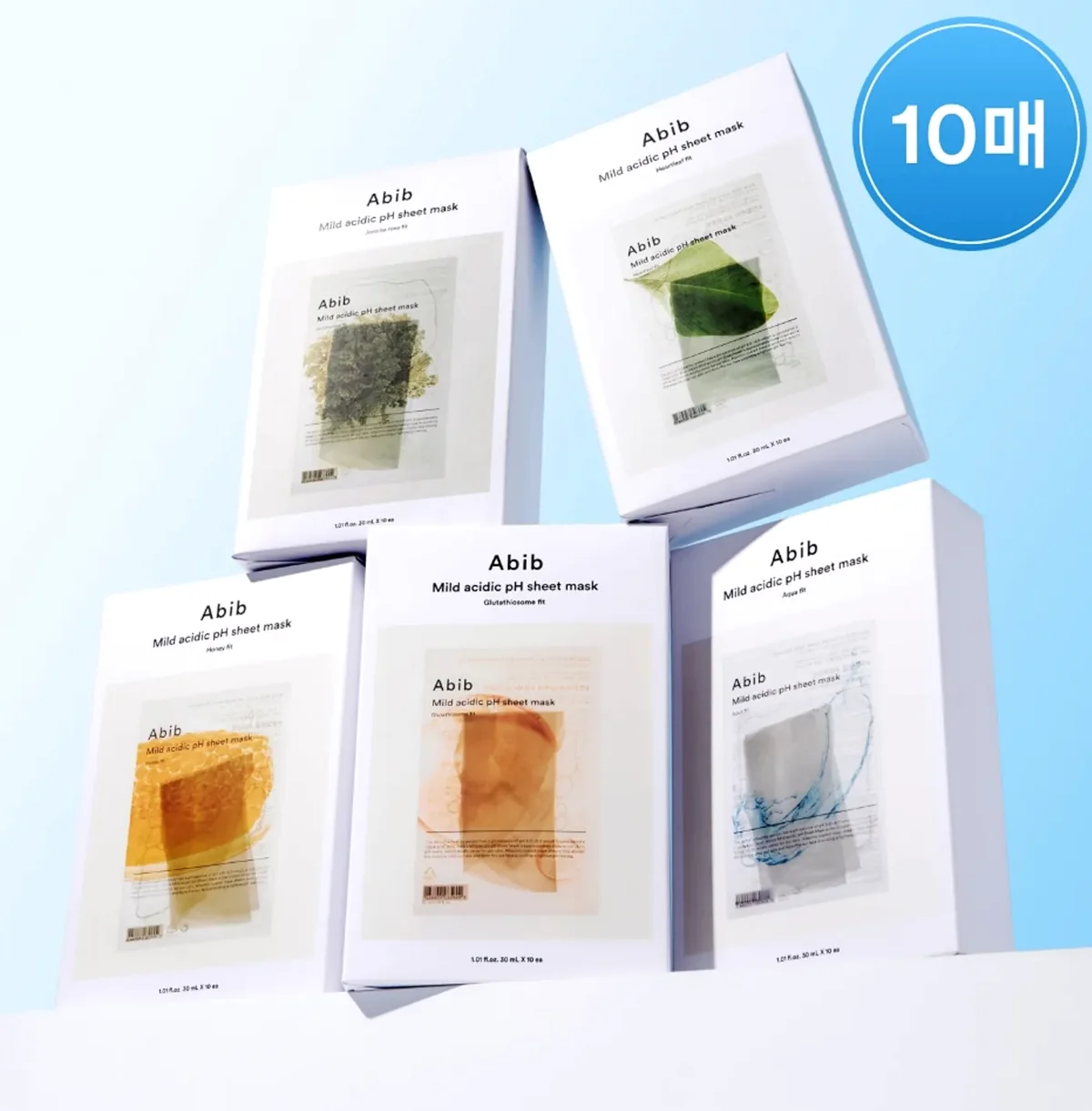
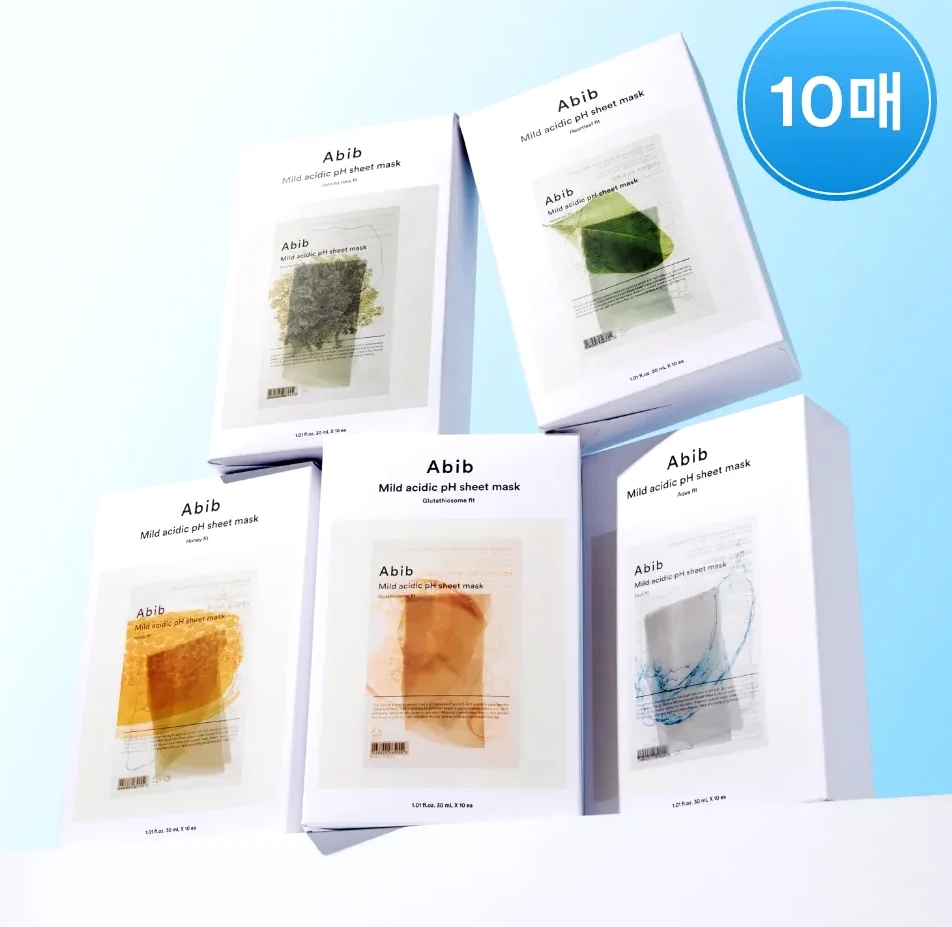
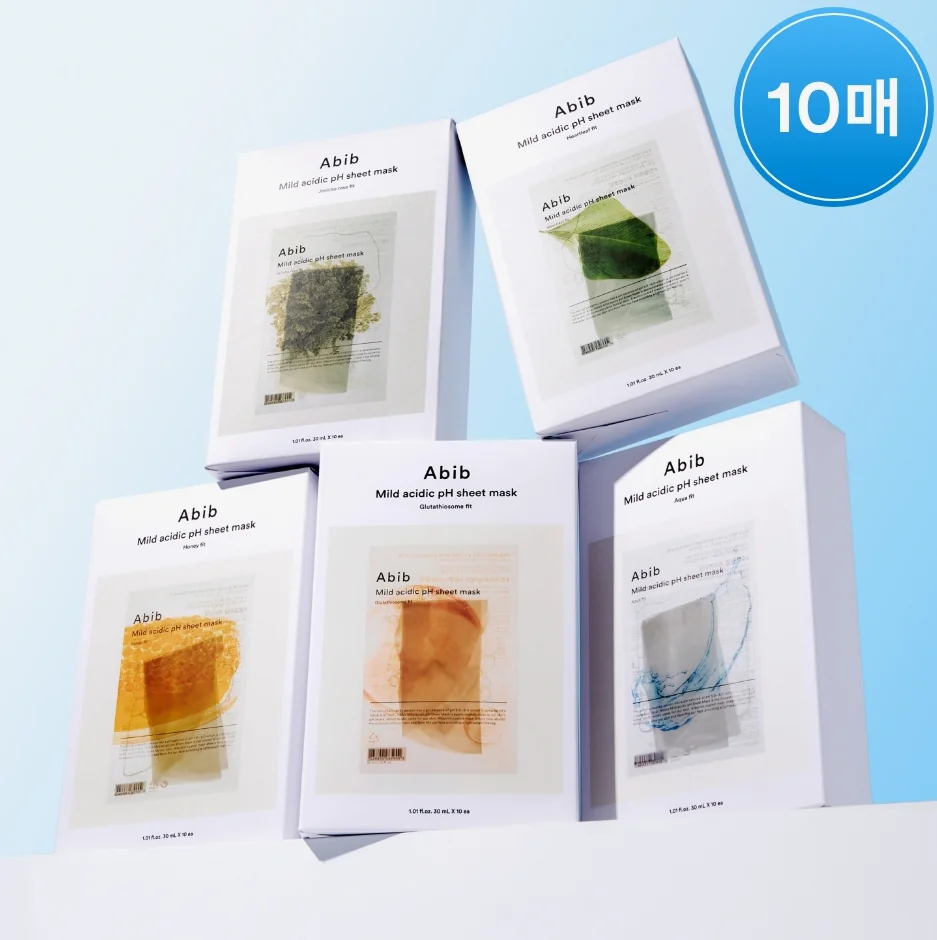
I picked up a 10-pack of the Abib Mild Acidic pH Sheet Mask at the Myeongdong Olive Young for ₩20,000 ($14.50) last Tuesday. On Olive Young Global, this same box typically retails for around $28.00, though seasonal sales frequently drop the price closer to $18.00. As a Seoul-based beauty editor testing over 300 products annually, I constantly receive questions from international readers about achieving glass skin through the famous 1-day-1-pack routine. The truth is, daily sheet masking only works if the essence formula respects your natural acid mantle. I spent the last 34 days testing all five variations of this line—Heartleaf, Jericho Rose, Aqua, Glutathione, and Honey—to measure their actual impact on skin barrier recovery. While the packaging shows all five types stacked beautifully together as an Olive Young bestseller ranking staple, their ingredient profiles serve entirely different purposes.
How the ALBAM Sheet Technology Actually Works
The ALBAM sheet is a specialized fabric made from a 50/50 blend of albumin (egg white protein) and bamboo-derived cellulose. When applied to the face, the sheet contracts slightly as it dries to improve essence absorption and provide a mild physical lifting effect.
Korean sheet mask materials have evolved significantly past basic cotton over the last four years. Abib utilizes this proprietary ALBAM sheet technology to maximize the fabric's moisture retention capacity. When the bamboo-derived cellulose soaks up the essence in the pouch, it transforms into a thick, gel-like texture that adheres tightly to the skin. As the mask sits on your face for 15 minutes, the albumin proteins begin to tighten. I noticed this creates a remarkably snug fit around the jawline, preventing the mask from slipping down while I type at my desk. However, there is a distinct downside to this material. The sheet feels quite stiff right out of the pouch before it fully warms up to your natural body temperature, making the initial application feel less luxurious than standard hydrogel masks.
Analyzing the 5 Formula Variations
The five mask variations target specific skin concerns using distinct active ingredients and essence textures. Heartleaf and Aqua focus on lightweight hydration and calming, while Jericho Rose, Honey, and Glutathione provide heavy nourishment and targeted brightening.
Heartleaf and Aqua for Daily Hydration
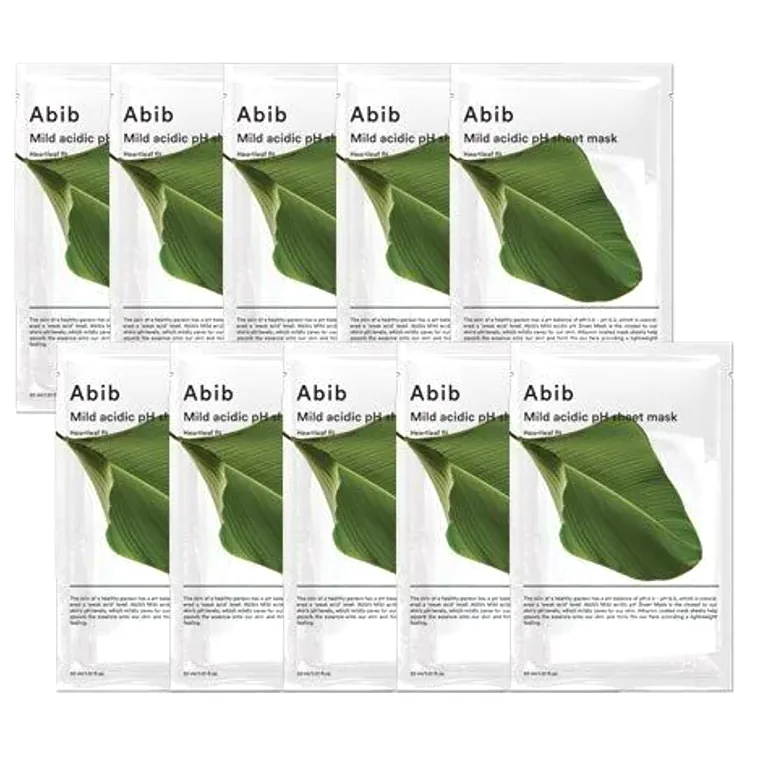
The Heartleaf version uses 89% Houttuynia Cordata Extract to instantly calm surface redness, while the Aqua version relies on multi-molecular hyaluronic acid for deep hydration. Both feature a watery essence that is lightweight enough for morning makeup prep.
In the ongoing debate of Houttuynia Cordata vs Centella Asiatica for soothing sensitive skin, Heartleaf (Houttuynia Cordata) consistently wins for immediate heat reduction in my testing. The Heartleaf Fit mask became my primary treatment after sun exposure last week. Meanwhile, the Aqua Fit Hyaluronic Acid version has a very thin essence viscosity and absorption rate. If you want to attempt a daily masking habit, these two are the safest entry points because they absorb fully in 11 minutes and will not clog pores.
Deep Nutrition With Jericho Rose and Honey
Jericho Rose and Honey variants feature a much thicker, serum-like essence designed specifically for dry skin types. They provide intense surface moisture and are strictly suited for nighttime application.
When dry winter winds hit Seoul, the Jericho Rose Nutrition mask becomes a staple on my vanity. It contains trehalose to help the skin retain moisture in harsh environments. The Honey Fit Propolis mask is incredibly rich, formulated with actual honey extract and propolis to feed depleted skin. My honest critique here is regarding the texture. The Honey version leaves a highly tacky residue that takes roughly 26 minutes to fully dry down. I strictly use this at night, as the sticky finish completely interferes with my morning liquid foundation application.
Brightening Focus With Glutathione
The Glutathione Vitamin C Shot mask combines powerful antioxidants to target hyperpigmentation and dullness. It uses a specialized delivery system to push brightening ingredients deeper into the epidermis.
Glutathione is currently dominating the ingredient lists of many new korean cosmetics. This particular mask pairs it with a stable Vitamin C derivative to gradually fade dark spots without stinging. I used this specific variant three times a week for a month and recorded a noticeable reduction in the red post-acne marks along my chin.
pH Balance and Barrier Repair Mechanics
Maintaining a mildly acidic surface environment is crucial for keeping the skin barrier intact and preventing bacterial growth. These masks are formulated at a pH of 5.5 to 6.0 to perfectly match the skin's natural state.
The core philosophy of this entire k-beauty line is strict skin pH level maintenance. The traditional 10-step korean beauty routine often strips the skin if you accidentally combine harsh foaming cleansers with strong chemical exfoliants. Using a low-irritation formula to reset the skin is non-negotiable for my routine. Every mask in this collection has passed a clinical hypoallergenic skin test.
"Mild Acidic pH level maintenance helps strengthen the skin's natural defense mechanism and prevents moisture loss." [1]
Based on my testing, the primary benefits of this formulation approach include:
- Mild acidic care for skin health: Matches the optimal pH 5.5 - 6.0 balance to prevent irritation after cleansing.
- 5 options for different skin concerns: Allows precise customization based on daily skin conditions, whether you need hydration, soothing, or heavy nutrition.
Price Comparison and Market Alternatives
A 10-pack of these masks typically costs between $18.00 and $28.00 depending on the international retailer. Compared to competitors, it sits squarely in the mid-tier price range for premium drugstore korean skincare products.
Let us look at the KRW to USD price conversion and where you should actually buy them. Stylevana vs Olive Young Global pricing often fluctuates dramatically. Stylevana sometimes lists the 10-pack for $16.50, but shipping frequently takes up to 14 days to reach the US. Olive Young Global is significantly faster but leans closer to $24.00 outside of their major quarterly sale periods. To understand its value, we have to compare it to other staples.
| Product Name | Key Ingredient Profile | Price per Sheet (Est. USD) |
|---|---|---|
| Abib Mild Acidic Heartleaf | 89% Houttuynia Cordata, Albumin | $1.80 - $2.40 |
| Mediheal Teatree Care Solution | Tea Tree Oil, Centella Asiatica | $1.20 - $1.90 |
| Round Lab Birch Juice Moisturizing Mask | Birch Sap, Hyaluronic Acid | $2.00 - $3.00 |
A direct Mediheal Teatree Care Solution comparison shows that Mediheal is slightly cheaper and performs better for drying out active acne breakouts. However, Abib wins easily for redness reduction. The Round Lab Birch Juice Moisturizing Mask went incredibly viral on Reddit's r/AsianBeauty for its cooling effect, but Abib's unique sheet material adheres much better to the sharp contours of the jaw and nose.
Building a solid korean skincare regimen requires understanding your skin's daily fluctuations rather than blindly following trends. The mild acidic line offers excellent versatility for different climates and concerns. If you have oily skin, stick strictly to the Aqua and Heartleaf versions. Dry skin types will benefit far more from the Jericho Rose and Honey variants. What is your current favorite sheet mask material for winter weather? Let me know your thoughts down below.
Frequently Asked Questions
Does the Abib Mild Acidic pH Sheet Mask actually work for sensitive skin?
Yes, the Abib Mild Acidic pH Sheet Mask is specifically designed for sensitive skin because its pH level of 5.5 to 6.0 closely matches the skin's natural acid mantle. By maintaining this balance, the mask strengthens the skin barrier rather than irritating it. The Heartleaf variation is particularly effective, utilizing Houttuynia Cordata Extract to calm redness and inflammation. Many users in the K-beauty community find these masks to be a staple for soothing reactive skin without the stinging or breakouts often caused by more alkaline sheet masks.
Heartleaf vs Jericho Rose: Which Abib Mild Acidic pH Sheet Mask is better?
The better mask depends entirely on your skin concern: Heartleaf is best for soothing irritation, while Jericho Rose is superior for deep nourishment and anti-aging. If you have oily, acne-prone skin or active redness, the Heartleaf mask's anti-inflammatory properties will provide the best results. However, if you have dry, tired skin, the Jericho Rose version provides intense hydration that helps achieve a plump, glass skin finish. Both utilize the specialized Albumin and Bamboo fabric (ALBAM) to ensure maximum essence absorption into the skin.
How much does the Abib Mild Acidic pH Sheet Mask (10 sheet) set cost?
The price for a 10-sheet box of Abib Mild Acidic pH Sheet Masks generally ranges from $18.00 to $28.00 USD on international platforms like Olive Young Global or Amazon. While they are often available for around ₩20,000 ($14.50) in local Seoul pharmacies and beauty shops, the slightly higher international price accounts for shipping and logistics. Buying these in the 10-sheet bulk pack is significantly more cost-effective than purchasing individual masks, which often retail for $3.00 to $4.00 each at specialty Korean cosmetics boutiques.
What are the benefits of the Abib ALBAM sheet technology?
ALBAM stands for Albumin and Bamboo, a unique fabric technology that allows the sheet mask to shrink and tighten upon contact with the skin. This tightening effect creates a slight lifting sensation and ensures the mask adheres perfectly to the contours of your face, effectively 'pushing' the essence into your pores. By combining bamboo fibers with albumin (egg white protein), the material becomes highly absorbent and soft. This technology is a key reason why Abib is a top recommendation for those pursuing a professional-level Korean beauty routine at home.
Can I use the Abib Mild Acidic pH Sheet Mask every day for glass skin?
Yes, you can use these masks daily as part of a '1-day-1-pack' routine because their mild acidic formula does not disrupt the skin's protective barrier. Unlike masks with high concentrations of active acids or fragrances, the Abib pH 5.5 - 6.0 range is formulated to be gentle and restorative. For the best glass skin results, many K-beauty enthusiasts rotate between the Aqua mask for hydration and the Glutathione mask for brightening. This consistent infusion of moisture and nutrients helps maintain a smooth, reflective complexion without causing sensitivity or irritation.
Sources
Mia Yoon
Seoul-based beauty editor covering Korean skincare for international readers. Tests 300+ products per year across Olive Young and Stylevana.